


Introduction
In the current Western statist global order, social and economic issues are treated primarily as technical problems to be engineered and managed in a top-down manner through coercive measures. The economy, in particular, is conceptualized and spoken of as though it were a machine: something to be “jump-started,” “stimulated,” or “cooled down” by central authorities.
This mechanistic depiction is not accidental. It reflects the philosophical roots of Western economics and other social sciences, which rest on utilitarianism, positivism, and a materialist worldview that reduces people to variables and societies to mechanical systems. The result is a flawed, dehumanizing, and harmful conceptualization—one that misleads both scholars and the public into believing that “the economy” is a distinct entity from society, to be managed by technocrats through top-down intervention.
Africonomics challenges this conceptual error and rejects the machine metaphor. It demonstrates that the economy is not a detached mechanical structure but a living, relational process, the fabric of society itself. It involves real people, their work, pursuits, relationships, values, and choices. The economy is society in motion.
The consequences of misunderstanding the economy are severe. Centralized, coercive, and technocratic attempts to “manage” the economy, as if fine-tuning a machine, have led and continue to lead to structural injustice, chronic instability, systematic repression and dispossession. To build truly stable and prosperous economies, it is essential first to grasp what the economy actually is and reject Western mechanistic, dehumanizing models.
1. Understanding What the Economy Is
Contrary to the prevailing view, the economy is not a separate, mechanical system within society—like an engine that can be tuned, rebooted, or fixed by pulling levers and pushing buttons. Yet this is exactly how mainstream economists and technocrats treat it. They describe the economy as “overheating,” “cooling off,” or needing a “jump-start”—as if it were a machine in need of continuous control and repair.
This mechanical conceptualization of the economy is not neutral, scientific, or harmless. They condition the public to view the economy as an object to be managed by governments and technocratic experts. They also reveal the influence of Western utilitarian and materialist thought, which has shaped not just economics, but the entire social sciences landscape under mechanistic, and often state-centered, frameworks.
This conceptualization is false and dangerous. The economy is not a distinct entity from society, to be centrally managed and manipulated through top-down technocratic intervention. It is society. It is the sum of people’s lives, choices, pursuits, and relations, interwoven in networks of social cooperation, exchange, and mutual service.
Everyday Life Is the Economy
People often think of “the economy” as something separate from activities like religion, sports, charity, or family life. But this is a misconception. Religious institutions, for example, are major economic actors: raising money, maintaining buildings, organizing events, and funding social programs. From the construction of places of worship to regular donations, religious activities are inherently economic.
The same is true of sports. Stadiums are built, tickets are sold, athletes are paid, and entire industries revolve around sponsorship, broadcasting, merchandise, and fan engagement. These are not isolated from “the economy”; they are integral parts of it. Every aspect of social life—from recreation to charity, from marriage to education—involves economic choices, actions, and consequences. The idea that there is a clear boundary between “economic” and “social” activity is a false dichotomy imposed by statist, technocratic models.
The Language of Control
Even subtle shifts in language reinforce this separation. For instance, media reports often refer to “Germany’s economy” rather than “the German economy.” The former suggests that the economy is a separate tool belonging to the government. The latter recognizes the economy as a living part of the people themselves. These distinctions matter, as they reflect how people think about economic agency, ownership, and control.
Mainstream economists frequently refer to “the economy and society,” as if they are two distinct entities. But this framing obscures the fundamental truth: the economy and society are the same. They are composed of people pursuing their goals, solving problems, and interacting peacefully and voluntarily.
The Economy Predates the State
Another major misconception is that the state stands above or apart from the economy, that it exists to organize or “run” it. In reality, society—and thus the economy—preceded the state. The economy emerges from voluntary human activity; from individuals, families, communities, and institutions engaging in production, exchange, and cooperation long before governments were formed.
The economy reflects the decentralized decisions of people building homes, starting businesses, learning skills, forming families, giving to charities, and creating value through peaceful cooperation. These everyday actions are the heartbeat of the economy.
A Human Definition
To truly understand the economy is to see it for what it is: a dynamic, decentralized network of human pursuits, exchanges, and social relations. It is not a machine or a mechanical structure to be engineered but a living process guided by human purpose, moral principles, and voluntary cooperation.
The economy involves people choosing and acting to meet their needs and aspirations—whether as individuals, families, businesses, institutions, or even communities—within a context of indirect exchange enabled by money. It is not something to be managed coercively or arbitrarily from the top down but something to be understood, respected, and nurtured from the ground up.
2. Money: The Fundamental Good of the Economy
The economy is a living network of human choices, actions, and relations—and money is its lifeblood. Yet despite its centrality, money remains one of the most misunderstood elements of economic life, even within the economics profession. Money is not economic wealth nor a tool of state control and exploitation. It is a natural-moral institution, the fundamental coordinating mechanism of peaceful human relations and flourishing. It plays three essential roles:
- Instrument of account – measuring value, prices, and profit/loss
- Store of purchasing power – preserving (and transferring) value over time
- Medium of exchange – enabling indirect trade beyond barter
These functions are inextricably linked, making money the fundamental good of the economy and the cornerstone of a free, just, and prosperous society. By enabling indirect exchange, money allows for specialization, large-scale cooperation, and economic growth. It eliminates the limitations of barter and creates the possibility of dynamic, decentralized, and productive networks of human cooperation.
Money Makes the Economy Possible
Money communicates essential information: prices, costs, and value signals. It facilitates decision-making for producers, consumers, savers, and investors. This system of monetary calculation and coordination allows society to function in an ethical and effective way, without the need for central planning, technocratic management, or coercion.
Money is the lifeblood of the economy, as it represents purchasing power, facilitates economic activities, and communicates crucial information. This decentralized, peaceful, and voluntary process requires no state control, and money prices naturally coordinate the economy with a level of stability, productivity, and prosperity unmatched by coercive systems.
Unsound Money, Broken Economies
When money is corrupted—through a policy of monetary inflation (artificial currency and credit creation) and manipulation—the entire economy suffers. Prices lose meaning, savings are eroded, people are systematically dispossessed, and productive investment is discouraged. Inequality grows, instability spreads, and corruption becomes normalized.
Modern economies are chronically unstable and stagnating primarily because money, under the existing Western statist global order, is thoroughly corrupted. Existing fiat monetary systems are examples of unsound money… The fiat-dollar era also led to increased confusion, distortion, and disarray in economics and the other social sciences, resulting in over-indebted, heavily taxed, crisis-laden, and distressed economies worldwide.
Since 1971, when the U.S. dollar officially became a fiat currency, the global economy has operated under a system of unbacked, government-issued money. The consequences have been dire, particularly for developing nations, whose economies suffer under rampant inflation, government debt issues, arbitrary currency devaluations, and monetary manipulation imposed by global institutions.
The Need for Sound Money
A sound monetary system is essential to economic justice, stability, and prosperity. Sound money preserves value, reflects reality, and enables peaceful, voluntary cooperation. It underpins civilizational progress by providing the foundation for stability, trust, decentralization, and long-term planning. By contrast, fiat money systems—backed by coercion and managed by central banks—facilitate structural injustice, political manipulation, and social decay.
Sound money is the cornerstone of a free, just, and prosperous economy, hence it is non-negotiable. A society that seeks to uphold moral principles and achieve structural justice and genuine prosperity, must adopt an entirely sound monetary system as a foundational principle.
This is especially critical for Africa and the developing world, where fiat currency regimes have devastated economies, undermined sovereignty, and impoverished millions for decades. The call for sound money is not merely technical; it is ethical, social, and civilizational.
3. Socioeconomic Systems
Understanding the economy also requires understanding how it is structured and governed. Societies are organized according to the same principles. Some lean more to voluntary cooperation and individual liberty, while most are built on central planning, coercion, and control. To categorize these systems, The Scale of Statism offers a principled framework. It ranks socioeconomic systems based on the extent of state involvement, centralization, and technocratic control—from the freest to the most oppressive.
The Six Systems on the Scale of Statism
Stage 1 – Free-Market Capitalism (or Free-Market Economy): A just, peaceful, and civilized system rooted in voluntary exchange, individual rights, sound money, and minimal state interference.
Stage 2 – Crony Capitalism: Markets still exist, but political favoritism and corporate-government collusion distort competition, create winners and losers, and undermine free enterprise, sound money, and structural justice. This is the stage where statism and, consequently, systemic corruption begin.
Stage 3 – Mixed Economy (Social Market Economy): The state plays a substantial role in guiding and managing economic life through regulation, taxation, and government spending.
Stage 4 – Economic Fascism: Authoritarian control intensifies. The state heavily directs economic activity, though nominal private ownership and markets remain. This system is more noticeably centralized, confiscatory, and repressive.
Stage 5 – Democratic Socialism: An economically totalitarian system of extensive state ownership and redistribution under a democratic façade. Heavy taxes, large welfare states, central planning, and openly authoritarian governance prevail.
Stage 6 – Marxist-Leninist Socialism (Totalitarianism): The most centralized, oppressive, and violent socioeconomic system. Individual rights, private property rights, and freedom are severely repressed as the state maintains full ownership of all relevant production and distribution means, with total control over society. This system often includes a god-like elevation and cult of personality surrounding the leader.
The Myth of Modern Capitalism
Contrary to the established academic and popular view, Western economies are not free-market capitalist systems. While they have adopted some elements of capitalism, such as private property and consumer markets, the reality is that Western nations, including the United States, well-known as the stronghold of capitalism, are heavily statist systems. Governments exercise comprehensive control through taxation, debt, regulation, and monetary manipulation.
What is commonly called capitalism in the modern world is actually statism. As I first remarked in The Scale of Statism, one of the most significant and detrimental fallacies of our time is the belief that the United States, other Western economies, and the global order represent free-market capitalism. The existing global order established and maintained by Western imperial states is heavily statist, closer to socialism than to a free-market system.
The deep-seated misconception that Western countries are or have been free-market capitalist has severe consequences. It allows interventionist states to pose as capitalists while practicing coercive, extractive, and repressive governance that distorts, destabilizes, and insidiously impoverishes economies.
Technocrats as Mechanics
In these statist systems, state officials act like mechanics trying to “run” and “fix” the economy, jump-starting growth, stimulating demand, tightening policy, or cooling inflation. But unlike machines, economies are not mechanical systems—they are networks of human actions and relations driven by principles, pursuits, and voluntary interaction.
Central planning and technocratic management may appear sophisticated, but this approach is tyrannical and inevitably leads to distortions, injustices, and destructive consequences. It requires systematic coercion, surveillance, and violations of people’s natural rights. Over time, such repressive control erodes prosperity, peace, and civilization.
The Tyranny of Technocracy
Technocratic economic management is not neutral or scientific; it is tyrannical by design. It treats people as material inputs and statistical aggregates, not as individuals with dignity and agency; as problems to solve, not persons to respect. It involves constant violations of natural rights: the right to life, liberty, and ownership of self and property. The result is a global socioeconomic order marked by arbitrary governance, systemic corruption, chronic instability, structural oppression, and social decay—not justice, peaceful relations, human flourishing, and civilizational advancement.
The true tragedy is that the current Western racialized and statist system was not inevitable. The West had the opportunity to build a genuinely free-market global order underpinned by sound money but instead, it constructed a statist world defined by fiat money, military dominance, conflict, and systematic dispossession.
The Ethical Standard: A Free-Market Economy
Among all available systems, only a free-market economy—based on voluntary cooperation, respect for natural rights, and sound money—meets the ethical and practical standards for a structurally just and genuinely prosperous society. It does not require systematic coercion, repression, and manipulation to function. It does not centralize power, concentrate wealth, confiscate legitimate property, or enforce conformity. It enables peaceful coexistence and human flourishing.
Statist systems, by contrast, inherently involve coercive, fraudulent, confiscatory, and repressive policies enforced through state aggression. Statist systems are unethical, unjust, uncivilized, dehumanizing, and destructive. They systematically violate natural-moral law principles and individual rights.
4. The Global Economy
Just as individuals and communities form economies through cooperation and exchange, nations also interact economically through international trade and commerce. No country operates in complete isolation. Even closed economies like socialist North Korea or Cuba engage in some form of cross-border exchange.
What we call the global economy is not a singular, centralized system but a vast, dynamic network of transactions, relations, and movements involving goods, services, capital, technology, labor, and ideas. It encompasses everything from multinational business activity and foreign investment to trade logistics, financial services, currency exchanges, and cross-border nonprofits.
Today’s global economy is far from free and market-driven. It has been shaped by statist models and dominated by Western imperial powers, particularly since World War I and, more recently, since the United States emerged as the sole global superpower in 1991. Overall, the global economy is predominantly a Western construct, shaped by the utilitarian, positivist, and Darwinian frameworks of Western thought.
State-Managed Trade Masquerading as Free Trade
What is typically labeled “free trade” is, in reality, state-managed trade governed by international agreements negotiated between governments, often for geopolitical advantage. These so-called free trade agreements are riddled with tariffs, quotas, subsidies, licensing requirements, and political leverage. They reflect not the spirit of open and free markets, but the interests of powerful states and corporations.
True free trade is a voluntary, ethical exchange across borders—not a global network of top-down, state-controlled commerce. Genuine free trade fosters peace, cultural exchange, mutual understanding, innovation, and prosperity. It enables diverse human groups to collaborate, share ideas, and benefit from each other’s contributions.
The modern racialized and statist approach does the opposite. It breeds distrust, conflict, isolation, and economic warfare. Trade is increasingly used as a tool for national security, geopolitical manipulation, and leverage rather than as a mechanism of rapprochement and peaceful cooperation.
Protectionism and Fragmentation
In recent years, the world has seen a rise in economic nationalism, protectionism, and geopolitical tension. Governments impose tariffs, manipulate currencies, subsidize domestic industries, and weaponize trade to punish rivals. Tariff increases and a potential trade war are dominating news headlines worldwide. Mercantilist thinking, once considered obsolete, has reemerged—or perhaps never truly left—with notable strength.
This fragmentation undermines economic growth, global peace, and human flourishing. Instead of fostering prosperity, international trade is increasingly seen as a threat, fueling resentment, distrust, and retaliation.
As the Brookings Institution observes:
The global economy is on an unsustainable path characterized by widening economic and social inequities, environmental degradation, and increasing concentration of poverty and deprivation that threaten global peace and prosperity. The global economy remains in a precarious state amid the protracted effects of the overlapping crises throughout the past several years. Global economic growth is projected to slow in the coming months; inflation pressures persist. Heightened financial risks amid recent bank failures, elevated sovereign debt levels, and persistent geopolitical tensions, among others, further cloud the economic outlook.
This unstable and precarious situation is not due to “too much capitalism” or “too much globalization.” It is the result of Western statism on a global scale, the dominance of governments over economic life, domestically and internationally.
Fair Trade Is Free Trade
Many critics of globalization call for “fair trade,” believing that markets are inherently exploitative. But trade, by nature, is fair because it is voluntary. Unlike government policies or mafia activities, trade and commercial transactions are consensual and do not involve coercion. Each party gives what they value less in exchange for what they value more. When trade is free from force and fraud, it is just by default.
The confusion arises because the current system, wrongly branded as free trade, is actually politicized and coercive. When Western governments subsidize their industries, flood markets with fiat money, and manipulate global institutions, they distort the playing field and corrupt the principle of voluntary exchange and free markets.
To advance justice, prosperity, and civilization, the world must establish genuine free trade rooted in mutual benefit, not political agendas or geopolitical power plays.
Statism Is the Fundamental Problem
The fundamental problem with the global economy is not openness but control. It is not international exchange but statist interventionism. Whether in domestic policy or international commerce, centralization, coercion, and technocracy have led to the very crises they claim to solve.
Trade should be a channel for peace, cultural exchange, and mutual enrichment, not a battlefield for political rivalry or imperial confrontation. Only when the global economy is grounded in natural-moral law, liberty, and sound money can it fulfill its potential as a vehicle for human rapprochement and flourishing.
Conclusion: The Economy Is People, Not a Machine
Mainstream economic discourse continues to describe the economy in mechanical terms, something to be managed, jump-started, or fine-tuned by technocrats. But this is a profound error with destructive consequences.
The truth is simpler and more human: the economy is society itself. It is made up of people—their lives, values, goals, actions, and relations. It reflects the daily pursuit of meaning, productivity, cooperation, and improvement. When we treat it as a machine, we strip it of its humanity and invite coercion, oppression, and corruption.
The economy is not separate from society; it is society. It cannot be centrally managed without systematically violating natural rights, entrenching structural injustices, and causing chronic instability. Attempts to do so invariably result in tyrannical systems, instability, impoverishment, and widespread, policy-caused human suffering.
A proper understanding of the economy requires us to see it for what it is: a decentralized and dynamic network of human choices, actions, and relations. It involves production, trade, saving, investment, entrepreneurship, and exchange, all built upon respect for property, liberty, and voluntary cooperation. At the foundation of this ethical system is money, the economy’s lifeblood and fundamental good, which must be sound and honest if society is to flourish.
Contemporary statist systems—based on fiat money, protectionist trade policies, confiscatory taxation, and technocratic management—have corrupted the economy and contributed to a global decline in peace, prosperity, and justice. The result is widespread economic turmoil, stagnation, social unrest, and continued geopolitical conflict.
To reverse this, the false metaphor of the economy as a machine must be rejected. We must embrace a truthful, ethical, and human-centered understanding, which recognizes the economy as the living process of people pursuing their goals and cooperating with others. The future of economics and human civilizational progress depends on this shift in understanding. The economy is not a mechanical system to be managed; it is a society of people with dignity and agency to be respected.

This work is licensed under a Creative Commons Attribution-NonCommercial 4.0 International License.
About the author
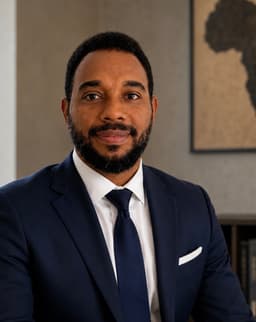
Manuel Tacanho
Manuel Tacanho is a social philosopher and economist; and the founder and president of the Afrindependent Institute.
See author's profile