


Introduction
The field of economics has long been in disarray, in part due to the lack of a sound, principled definition. The prevailing definitions, though widely accepted, are fundamentally flawed. They focus narrowly on material processes like production, distribution, and consumption, failing to capture the true nature and higher purpose of economics as the principal social science.
Definitions matter. They shape how people understand and engage with concepts, institutions, and systems. A definition is more than a description; it sets the direction, scope, and goals of a discipline. When poorly defined, a field like economics can veer off course, producing models and policies that are not only incoherent but potentially destructive.
This article asserts that the prevailing definitions of economics are superficial, mechanistic, and ultimately misleading. As a result, economic models built on these foundations have facilitated coercive, confiscatory, and repressive policies under the present Western global order of statist and technocratic socioeconomic systems.
A new definition is needed, one that aligns economics with its true essence and constructive purpose. The Africonomics definition of economics:
Economics is the social science that studies human action, production, and exchange with the fundamental purpose of fostering structural justice, genuine prosperity, and peaceful human relations within and among societies.
This definition offers a principled vision that anchors economics not only in material aspects but also in the universal reality of natural-moral law, human dignity, and natural rights. It reorients the field away from sterile utilitarianism and positivism toward a human-centered social science. By placing objective moral truth and structural justice at the center, this definition offers a more accurate and constructive foundation for economic inquiry, theory, and policy.
1. Why Existing Definitions Are Flawed
The standard definitions of economics, while not entirely incorrect, are fundamentally flawed and misleading. They fail to capture the essence of economics as a human science concerned with justice, prosperity, and peaceful human relations. Instead, they reduce the field to materialist and mechanistic processes, such as resource allocation, market behavior, and statistical analysis detached from human moral nature and reality.
A widely cited definition, found on Investopedia, states:
Economics is a social science that focuses on the production, distribution, and consumption of goods and services. The study of economics is primarily concerned with analyzing the choices that individuals, businesses, governments, and nations make to allocate limited resources.
Even in more free-market circles, the definition often reads:
Economics is the study of how societies allocate limited resources to satisfy unlimited wants and needs. It examines production, distribution, and consumption, as well as factors like supply, demand, prices, and incentives.
While such definitions are descriptive, they are ultimately inadequate and detrimental. They fail to reflect the ethical dimensions of human nature and actions, the significance of natural rights, and the moral consequences of economic choices. They imply that economics is simply about efficiency or utility maximization—disregarding the fundamental social and philosophical questions that economic systems raise.
The most influential academic definition comes from British economist Lionel Robbins, who wrote in An Essay on the Nature and Significance of Economic Science (1932): “Economics is the science that studies human behavior as a relationship between ends and scarce resources, which have alternative uses.”
This definition, though historically important, cemented a mechanistic and utilitarian view of economics that has dominated ever since. It abstracts from the ethical context of human choices and actions and fails to offer a constructive standard for evaluating policies or theories. Thus, it contributes to the confusion and distortion that plague modern economics.
These flaws are not necessarily the result of bad intentions. Robbins and other early economists sought precision and scientific rigor. But the effect of these narrow definitions has been to strip economics of its necessary ethical grounding and to legitimize models and policies that enable coercion, fraud, repression, and injustice under the guise of scientific neutrality.
As I first discussed in Africonomics: A School of African Philosophical and Economic Thought:
Western economics is in disarray, marked by much confusion and distortion. The fundamental issue with Western economics and other social sciences is that they rest on a mechanistic worldview and are dominated by utilitarian and positivist frameworks. This lack of ethical grounding has led to confusion and distortion, resulting in garbled economic models with coercive, fraudulent, confiscatory, and repressive policy implications.
The lack of a definition that aligns with objective moral reality and articulates the true purpose of economics has left the field adrift and disoriented, dominated by seemingly scientific yet flawed and harmful models. Existing utilitarian definitions downplay or ignore the moral obligations and social responsibilities inherent in human choices, actions, and institutions. Hence, economists construct models that normalize unethical practices, especially in contemporary statist socioeconomic systems where coercion, fraud, and repression are built into policy design.
A principled and constructive definition must recognize that economics is not primarily about things, but about people—their choices, interactions, institutional structures, and the moral implications of their actions.
2. Definition and Purpose of Economics
The continued reliance on flawed definitions has contributed to the rise of misguided economic models—models that appear scientifically rigorous but are, in reality, politicized, ethically bankrupt, and often ruinous in practice. These definitions have enabled technocratic and statist approaches that treat people as data points or mechanical parts rather than as moral agents with inherent dignity and natural rights.
By contrast, a proper definition of economics must reflect its true nature as a social science rooted in human volition, ethical discernment, and relational dynamics. It must guide economic inquiry toward outcomes that promote human peace and flourishing rather than state control, oppression, or exploitation.
Thus, Africonomics establishes a new definition:
Economics is the social science that studies human action, production, and exchange with the fundamental purpose of fostering structural justice, genuine prosperity, and peaceful human relations within and among societies.
This definition reorients economics toward its rightful and constructive purpose of serving human flourishing instead of state power. It incorporates the essential elements of ethical evaluation, human dignity, and peaceful cooperation. It also retains the practical core of economic analysis, in that economics analyzes human choices, actions, relations, and resource allocation in the context of indirect exchange societies enabled by money.
This analytical focus is secondary, not primary. The essence of economics is not merely about resource allocation, but about understanding how human societies can justly and peacefully thrive. Such a redefinition requires economists and other social science scholars to ground their work in natural-moral law ethics—objective principles that prohibit deception, fraud, coercion, confiscation, or repression. These ethical guardrails are essential for evaluating whether a theory or policy is sound, coherent, serves human flourishing or facilitates oppressive practices and injustice.
Economics that justifies or tolerates such violent practices is not science; it is pseudoscience cloaked in technical jargon. No legitimate social science should provide intellectual cover for coercion, fraud, or systemic injustice.
As a science of human choice, action and interaction, economics must be grounded in moral philosophy. It must reflect the reality that people are not experimental objects to be managed, manipulated, or sacrificed for abstract or political goals. They are moral agents with rights and obligations, participants in society whose dignity and natural rights should be respected.
This is why the redefinition of economics is not a semantic exercise. It is a paradigm shift, a call to restore ethical foundations to the field and reorient it toward its true purpose: advancing justice, prosperity, and peace.
3. Muddled Economics, Ruinous Policies
The misleading definitions that dominate modern economics reflect a Western intellectual tradition rooted in utilitarianism and positivism. This tradition treats human beings as material inputs in mechanistic systems and promotes models that lack ethical grounding. As a result, modern economics has become detached from the realities of justice, rights, and moral responsibility.
The prevailing “value-free” economic paradigm has normalized coercive, fraudulent, confiscatory, and repressive policies under the guise of scientific objectivity. This has contributed to the rise of technocratic governance, widespread corruption, political dysfunction, economic instability, and conflict across the globe.
Economics is often called “the dismal science.” It may presently be a dismal science not because of its subject matter, but due to its lack of ethical foundations, which has stripped economics of humanity and meaning. Without moral standards as guardrails, economic theories have justified arbitrary state control, fiat monetary fraud, systemic injustice, and outright oppression.
This technocratic, statist approach is now producing disastrous outcomes. Mainstream economic models, once thought to be rigorous and scientific, appear increasingly muddled, arbitrary, and destructive. These models serve political power rather than truth, justice, and civilizational advancement—enabling a racialized and militarist global order built on state coercion, centralization, dispossession, exploitation, and repression.
The result is a confused and statist world of increasing authoritarianism, decay, and conflict. As the V-Dem Institute’s 2023 Democracy Report reveals, by 2022, 72 percent of the world’s population—5.7 billion people—lived under autocratic regimes. This is not an unfortunate coincidence. It is the direct consequence of systems founded on flawed economic thought, systems that elevate state power and systematically disregard human dignity, liberty, and agency.
As I first explained in The Scale of Statism:
One of our time’s most significant and detrimental fallacies is the misconception that existing economies are capitalist… In reality, Western countries and the current global order, built by imperial states, are statist systems that lean closer to socialism than to free-market capitalism.
This misperception has permeated academia, where statist models dominate. Economists are often rewarded for producing theories that support state intervention, while those who challenge the orthodoxy are marginalized. The profession has become politicized and embedded in the machinery of the state itself.
In this context, it is no surprise that economics has lost its way. It has become a field obsessed with numbers, models, and empirical data at the expense of meaning, truth, ethics, and justice. It treats societies as mechanistic systems and engineering problems, overlooking the moral dimensions of human life.
Economics is not about control and centrally managing economies. It is about understanding human choices, actions, and structure of social relations. It is not about designing systems of concentrated power and repressive control; it is about evaluating how individuals and societies can thrive justly and peacefully.
To restore humanity and meaning to economics, the field must reject its utilitarian and positivist foundations and adopt the natural-moral law framework of Africonomics. It must return to its rightful purpose of fostering justice, prosperity, and peace in a world of thinking, choosing, and morally responsible human beings.
4. The Constructive Role of Economists
As economics is reoriented toward fostering structural justice, genuine prosperity, and peaceful human relations, economists must likewise reorient to that purpose. Their role is not merely technical or analytical, but moral and philosophical. Economists must recognize their responsibility to truth, to ethics, and human flourishing.
The need for moral clarity has long been felt, even if only intuitively. In his book What Should Economists Do? economist James Buchanan posed a fundamental question: What is the proper role of economists? The persistence of such a question reflects the disorientation that has resulted from inadequate definitions of economics. Without a principled definition and understanding of what economics is, economists struggle to find their purpose.
The true nature and overriding purpose of economic science go beyond studying the production, distribution, and consumption of goods and services… Economics must prioritize studying and understanding socioeconomic phenomena to foster justice, prosperity, and peaceful relations within and among human societies.
Economists should be guided by truth, committed to justice, and oriented toward human flourishing. Their role is not to facilitate state control, technocratic management, or centralized economic engineering. It is to seek, establish, and communicate economic truths, so that individuals and societies can flourish freely, justly, and peacefully.
Mainstream economics has failed in this task. It serves as an intellectual tool of the state, justifying coercive, confiscatory, and repressive policies under the guise of expertise and scientific objectivity. It has prioritized centralized models, abstract data, and predictive control over the dignity and rights of people.
This failure has contributed to widespread crises—economic, political, moral, and even demographic. A science that claims to study human activities but ignores human ethics cannot offer real solutions. It can only deepen confusion, enable systemic exploitation, and fuel the oppressive machinery of state control.
Human society should not be treated as a laboratory where citizens become unwitting test subjects for positivist and technocratic experimentation. Economics that justifies coercive, repressive, fraudulent, or confiscatory policies fails the fundamental test of justice and cannot legitimately claim scientific status. Such approaches, despite their technical veneer, are fundamentally pseudoscientific, as they contradict the natural-moral law foundations that genuine social science requires.
No credible philosopher of science would argue that economics exists to rationalize models whose implementation requires coercive, fraudulent, or repressive measures. The true purpose of economic science must include respect for human dignity, agency, and voluntary cooperation rather than systems that rely on threats, compulsion, and state aggression to maintain. When economic theory necessitates force for its implementation, this reveals not scientific validity but fundamental conceptual failure.
The economics profession must be reformed. It must abandon its fixation on state-centered models and rediscover its human purpose and ethical compass. Economists should no longer serve as functionaries of political power but as defenders of truth, justice, and liberty.
In this spirit, Africonomics advances a fundamentally different alternative. Grounded in natural-moral law and a correct understanding of human beings as moral agents, Africonomics affirms that economics must be rooted in truth and justice, not power and control. It emphasizes our shared humanity and the universal moral order that transcends culture, creed or empire.
The constructive role of economists is to pursue and establish economic truths to foster a world where socioeconomic systems are structurally just, fundamentally peaceful, and truly civilized. This is the fundamental purpose of economics, and the standard by which economists must now be evaluated.
Conclusion: Restoring Meaning to Economics
The prevailing definitions of economics have failed. By reducing the field to the study of material flows and resource allocation, they have stripped it of its ethical foundation and social purpose. These flawed and superficial definitions have contributed to economic confusion, distorted models, and policies that enable coercion, fraud, and systemic injustice.
Economics is not merely a tool for managing scarcity, utility, or optimizing output. It is the principal social science, a field that deals with human beings, their choices, actions, and relations. Thus, it must be grounded in truth, ethics, and a commitment to human flourishing. This article has established a principled definition of economics, one that reflects its true nature and aligns with its rightful purpose:
Economics is the social science that studies human action, production, and exchange with the fundamental purpose of fostering structural justice, genuine prosperity, and peaceful human relations within and among societies.
This redefinition is not simply academic. It is civilizational. It redirects economic thought toward moral clarity, structural justice, and civilized social order. It challenges economists and policymakers to abandon mechanistic, state-centric frameworks and adopt an approach that aligns with objective moral reality and honors the natural rights, dignity, and agency of individuals.
Amid rising authoritarianism, economic stagnation, social decay, and global instability, the need for such a reorientation could not be more urgent. The state-centered, technocratic models that dominate the current global order have proven dehumanizing, destabilizing, and destructive. To move toward a freer, more prosperous, and more peaceful world, economics must reclaim its moral essence. That begins with redefining what economics is, and what it is for.

This work is licensed under a Creative Commons Attribution-NonCommercial 4.0 International License.
About the author
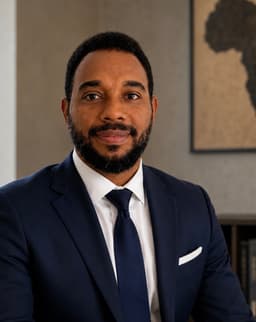
Manuel Tacanho
Manuel Tacanho is a social philosopher and economist; and the founder and president of the Afrindependent Institute.
See author's profile